Wetiko
In the book Columbus and Other Cannibals, indigenous author Jack D. Forbes lucidly explores a psychological disease that has been informing human self-destructive behavior that Native American people have known about for years.
After reading his book, it was clear to me that he was describing the same psychospiritual disease of the soul that I wrote about in The Madness of George W. Bush. I introduce the idea that from the dawn of human history our species has fallen prey to a collective psychosis which I call malignant egophrenia.
Speaking about this very same psychic epidemic, Forbes writes, “For several thousands of years human beings have suffered from a plague, a disease worse than leprosy, a sickness worse than malaria, a malady much more terrible than smallpox.”
Indigenous people have been tracking the same “psychic virus” for many centuries, calling it “wetiko” in Cree (windigo in Ojibwa, wintiko in Powhatan), a term that refers to a diabolically wicked person or spirit who terrorizes others by means of evil acts.
Professor Forbes, who was one of the founders of the Native American movement during the early ’60s, says, “Tragically, the history of the world for the past 2,000 years is, in great part, the story of the epidemiology of the wetiko disease.”
Wetiko/malignant egophrenia is a “psychosis” in the true sense of the word, a “sickness of the soul or spirit.”
Though calling it by different names, Forbes and I are both pointing to the same illness of the psyche, soul, and spirit that has been at the root of humanity’s inhumanity to itself.
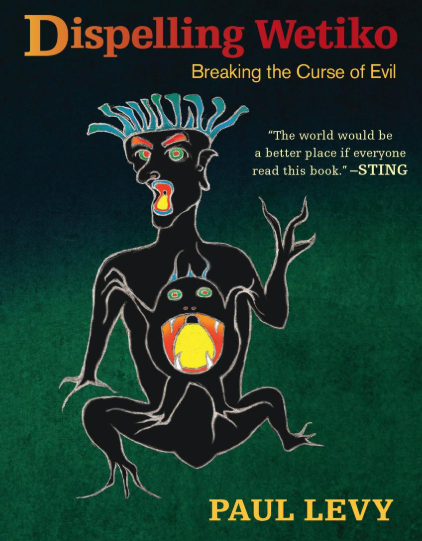
There is no possibility of awakening from our collective nightmare without first becoming aware of what it is that is keeping us asleep. - Dispelling Wetiko: Breaking the Curse of Evil by Paul Levy